


HP ProLiant DL380 Gen9 Server
The HP ProLiant DL380 Gen9 Server is a highly versatile and scalable server designed for enterprise-level computing needs. You can order this product and all server accessories such as Ram server, CPU Server, Motherboard Server, Hard server and more in network equipment market. If you want to know more about HPE products, contact us.


HPE ProLiant DL380 Gen10 Server
The HPE ProLiant DL380 Gen10 Server is a high-performance and versatile server designed for enterprise-level computing and data center environments. You can order Serves and all server accessories such Ram server, CPU Server, Motherboard Server, Hard server and more in network equipment market. If you want to know more about HPE products, contact us.

An HPE Server is an enterprise-class computing solution developed by Hewlett Packard Enterprise (HPE), a global leader in IT infrastructure. These servers are designed to deliver high performance, scalability, and reliability for modern workloads in businesses, data centers, and cloud environments. HPE servers support applications such as virtualization, databases, artificial intelligence, big data analytics, and edge computing, making them suitable for organizations of all sizes. The most well-known family, HPE ProLiant, is widely used across industries and is recognized for its advanced management tools, strong security features, and flexible configurations. With their integration into hybrid IT and cloud ecosystems, HPE servers play a critical role in powering digital transformation.
What is HPE Server?
An HPE Server is a business-class computer system developed by Hewlett Packard Enterprise (HPE) that provides computing power, storage, and network resources to run applications, manage data, and support IT operations. Unlike regular PCs, HPE servers are built for high performance, reliability, and scalability, making them suitable for data centers, cloud environments, enterprises, and edge computing. The most popular family is the HPE ProLiant series, which is widely used by organizations worldwide to run critical workloads such as databases, virtualization, artificial intelligence, and big data analytics.
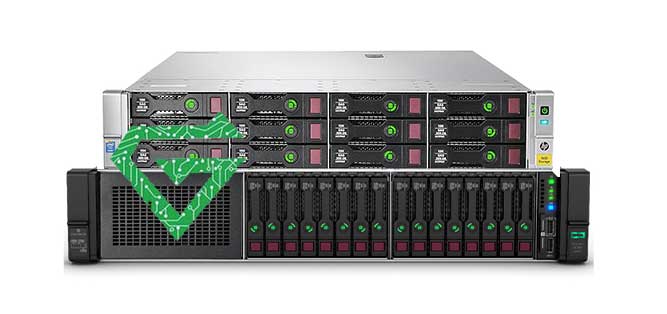
Types of HPE Servers:
1. HPE ProLiant Servers
The HPE ProLiant family is the most popular and widely used HPE server line. These servers come in rack, tower, and blade designs, making them versatile for different business environments — from small offices to large data centers. They are built for general-purpose workloads, including virtualization, databases, web hosting, and enterprise applications. ProLiant servers are well known for their performance, easy management with HPE iLO (Integrated Lights-Out), and strong security features. They form the backbone of many IT infrastructures worldwide.
2. HPE Synergy
HPE Synergy is a composable infrastructure platform, which means IT resources like compute, storage, and networking can be dynamically configured and allocated based on workload needs. Instead of having fixed physical servers, organizations can use Synergy to create flexible resource pools that can be quickly adjusted for cloud, DevOps, or enterprise applications. This helps reduce waste, improves efficiency, and supports hybrid IT strategies where businesses combine traditional IT with cloud environments.
3. HPE Apollo Servers
The HPE Apollo family is designed for high-performance computing (HPC), artificial intelligence (AI), and big data analytics. These servers provide massive processing power and high-density compute capacity, making them ideal for scientific research, simulations, machine learning training, and advanced analytics. Apollo servers are used in industries such as aerospace, healthcare, financial services, and research institutions where huge volumes of data must be processed quickly.
4. HPE Integrity Servers
HPE Integrity servers were created for mission-critical workloads that require maximum reliability and continuous uptime. Originally based on Intel Itanium processors, they were later transitioned to Xeon processors as industry standards evolved. Integrity servers are often used by banks, telecom companies, and government organizations that cannot afford downtime. They feature fault-tolerant architectures, redundant components, and strong data protection, ensuring business continuity for critical systems.
5. HPE Superdome Flex
The HPE Superdome Flex is a large-scale, in-memory computing platform designed for real-time analytics, big data, and enterprise applications that demand enormous processing power. It supports workloads like SAP HANA, large-scale databases, and AI-driven analytics, offering scalability to handle terabytes of data in memory. Superdome Flex is known for its ability to deliver very high performance, resilience, and scalability, making it essential for organizations that rely on real-time decision-making and massive data processing.
6. HPE Edgeline Servers
HPE Edgeline servers are specialized systems built for edge computing and IoT (Internet of Things). Instead of sending all data back to a central data center or cloud, Edgeline servers allow businesses to process and analyze data directly at the edge close to devices, sensors, or users. This reduces latency, improves efficiency, and enables faster decision-making. They are commonly used in industries such as manufacturing, healthcare, retail, and telecommunications, where data must be acted on in real time.
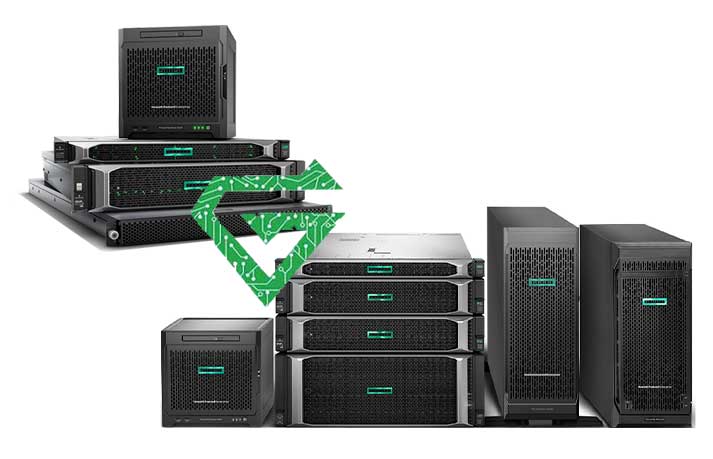
Features of HPE Servers:
High Performance
- Powered by Intel Xeon and AMD EPYC processors.
- Large memory capacity (supports TBs of RAM Server).
- Flexible storage: SSDs, HDDs, NVMe.
Scalability & Flexibility
- Available in tower, rack, and blade formats.
- Easily expandable to meet business growth.
- Supports virtualization, AI, cloud, databases, analytics.
Management & Automation
- HPE iLO (Integrated Lights-Out) for remote server management.
- HPE OneView for centralized IT infrastructure management.
- Automated monitoring, updates, and troubleshooting.
Advanced Security
- Silicon Root of Trust (firmware security).
- Protection against firmware attacks and unauthorized access.
- Secure encryption and authentication options.
Energy Efficiency
- Intelligent power and cooling systems.
- Reduces energy consumption and operational costs.
Reliability & Availability
- Redundant power supplies and cooling fans.
- High uptime with fault tolerance features.
- Designed for mission-critical workloads.
Hybrid & Cloud Ready
- Seamless integration with HPE GreenLake, hybrid cloud, and edge computing.
- Optimized for modern IT environments like DevOps, AI, and IoT.
Different Types of HPE ProLiant Servers:
- HPE ProLiant DL (Density Line)
The DL series stands for Density Line and includes rack-mounted servers. They are the most popular HPE servers, designed for data centers and enterprises that need powerful computing in a space-efficient form. DL servers are highly scalable, support virtualization, databases, cloud workloads, and high-performance applications, and are widely used because they fit into standard server racks.
- HPE ProLiant BL (Blade Line)
The BL series stands for Blade Line and represents blade servers that fit into a shared enclosure (chassis). Instead of each server having its own power, cooling, and networking, the enclosure provides these resources for all blades, reducing cabling and saving space. BL servers are ideal for large enterprises, virtualization, and cloud computing where density, centralized management, and energy efficiency are priorities. (Note: HPE has shifted much of blade strategy toward HPE Synergy).
- HPE ProLiant ML (Modular Line)
The ML series stands for Modular Line and includes tower servers that look like desktop PCs but contain enterprise-grade hard Server. These are best suited for small to medium businesses (SMBs) or branch offices because they are easy to deploy, don’t require a rack cabinet, and can later be upgraded to rack form if needed. ML servers are flexible entry points into enterprise IT.
- HPE SL (Scalable Line)
The SL series stands for Scalable Line and was designed for high-density and scale-out computing environments, such as web hosting, cloud providers, and big data. These servers provided customizable configurations for companies that needed many servers in a compact form with shared infrastructure. While less common today, the SL series laid the foundation for modern high-density designs like Apollo and Synergy.
- HPE RL (Rackmount Line)
The RL series is a more recent HPE ProLiant family focused on cloud-native, scale-out workloads. These servers are built in partnership with companies like Ampere (ARM processors) to deliver high efficiency for cloud applications, containerized workloads, and edge environments. RL servers are designed for organizations that want to optimize cost, power efficiency, and performance in modern cloud-native infrastructures.
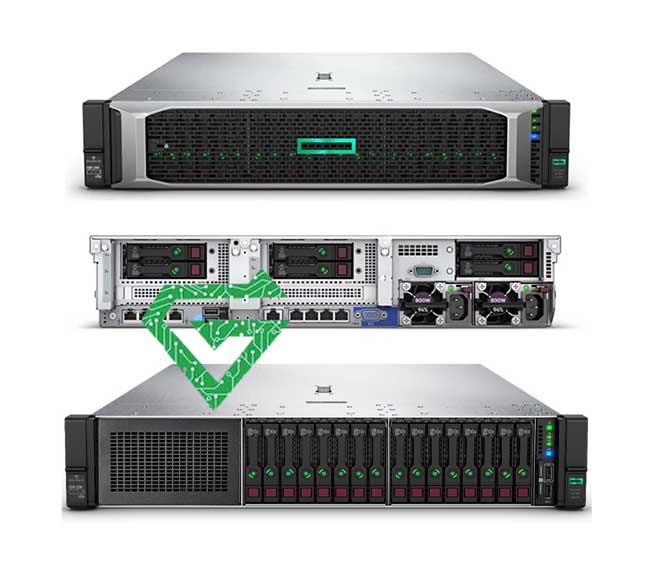
Applications of HPE Servers:
HPE servers are used across industries and IT environments because of their performance, scalability, and security features. In data centers, they host critical business applications like databases, ERP systems, and virtualization platforms. For cloud computing, HPE servers power private, public, and hybrid cloud infrastructures, often integrated with HPE GreenLake for as-a-service models. In AI and machine learning, HPE Apollo and ProLiant servers handle training and inference tasks for deep learning and analytics. In big data, they process massive datasets for industries such as healthcare, finance, and telecommunications. At the edge, HPE Edgeline servers are applied in IoT, manufacturing, retail, and smart cities to analyze data in real time. Additionally, HPE servers are widely used in web hosting, email, virtualization, scientific research, and mission-critical workloads where uptime and security are essential. Totally;
- Data Center Applications
- Cloud Computing
- Artificial Intelligence & Machine Learning
- Big Data & Analytics
- Edge Computing & IoT
- Mission-Critical Workloads
- Web & Application Hosting
- Scientific Research & HPC
Purchasing HPE Servers from Atech.ae:
If you’re considering acquiring HPE servers, Atech.ae offers a diverse range of models to cater to various business needs. For instance, the HPE ProLiant DL380 Gen10 Server it supports up to 28 cores per CPU Server and offers flexible configurations with one or two processors, making it suitable for a wide range of workloads, for its versatility and performance, making it suitable for enterprise-level computing and data center environments.
Additionally, Atech.ae ensures the authenticity of its products and offers warranties, free consultations, and a product return guarantee, providing peace of mind with every purchase Atech.ae. For personalized assistance or to discuss specific requirements, you can reach out to Atech.ae’s dedicated team via WhatsApp at +971522135004 or email at [email protected]