


Cisco ASR1002X Router

Cisco C8300-1N1S-4T2X Router
This Cisco Router has a unique features that make it different with other ones. This model designed by cisco company and counted 8300 series of cisco router. one of difference between this network router and other one is in the number of ports. Cisco C8300-1N1S-4T2X Router has 2×10Gigabit Ethernet and 4× 1Gigabit Ethernet ports. This product has some slots such as 1 SM, 1 NIM and 1 PIM.


Cisco C8300-1N1S-6T Router
Cisco C8300-1N1S-6T Router is especially designed for large and medium-sized branch offices that require high performance, cloud network security, and Designed for those who need automation, the Catalyst 8300 Series offers SD-WAN capabilities and advanced security with flexibility in choosing WAN and LAN ports.

Cisco C8300-2N2S-6T Router


Cisco Catalyst C8200-1N-4T Router
Cisco Catalyst C8200-1N-4T Router has multi-layered security that supports cloud-based security services and SASE-compliant, flexibility and providing the best internal security services for use in offices and small and medium-sized companies. This product is available at an excellent price and optimal performance in the network equipment market.


Cisco Catalyst C8200L-1N-4T Router


Cisco ISR 4431/K9 Router
Cisco ISR 4431/K9 Router is a product that designed by cisco company. This cisco router supports 3× NIM slots, 1 module slot, 2×USB slots and 1×ISC slot. The Cisco ISR 4431/K9 Router is equipped with 8 GB of flash memory and can be expanded up to 32 GB. It uses 2 GB of default DDR3 ECC DRAM memory. The maximum power of this system with an AC power supply and POE is 500 watts.

A router is one of the most important pieces of networking equipment in any network. It connects multiple networks and directs data traffic between them, ensuring that information reaches its correct destination efficiently. Routers play a critical role in network communication, allowing devices on different networks to exchange data, whether it’s sending an email, accessing a website, or connecting to cloud services. They also enhance network security by controlling and filtering traffic, making sure only authorized data passes through.
To achieve powerful and reliable network performance, many organizations rely on Cisco routers, one of the most widely used brands in the world. Cisco Systems, a global leader in networking technology, designs routers that can handle high volumes of traffic while offering advanced features such as security, routing protocols, and network management tools. Cisco routers are flexible and scalable, suitable for small offices, large enterprises, and even Internet Service Providers (ISPs). For example, a company might use a Cisco 4000 series router to connect its internal network to the internet, manage traffic between multiple branch offices, and implement security measures such as VPNs and access controls.
What is Cisco Router?
A Cisco router is a networking device developed by Cisco Systems, a global leader in networking technology, designed to connect different networks and efficiently manage data traffic. Cisco routers are widely recognized for their reliability, scalability, and advanced features, making them a preferred choice for businesses, service providers, and large enterprises.
They run on Cisco’s Internetwork Operating System (IOS) or its variants, such as IOS XE, IOS XR, and NX-OS, which provide robust support for routing protocols, security features, and network management tools. These routers can handle large volumes of data while maintaining secure and stable network operations, supporting wired, wireless, and virtual networks.
Cisco routers come in various models to meet different needs from small branch offices using the Cisco 800 or 900 series, to enterprise-level networks with the 4000 series, and large-scale service providers using ASR or CRS series routers. They support a wide range of routing protocols, including RIP, OSPF, EIGRP, and BGP, allowing seamless communication across networks of any size.
Security is another major strength, as Cisco routers can implement firewalls, access control lists (ACLs), VPNs, and other protective measures to ensure safe data transmission. Additionally, they provide advanced features such as Network Address Translation (NAT), Quality of Service (QoS), DHCP, and inter-VLAN routing, which allow organizations to optimize and manage their network traffic effectively.
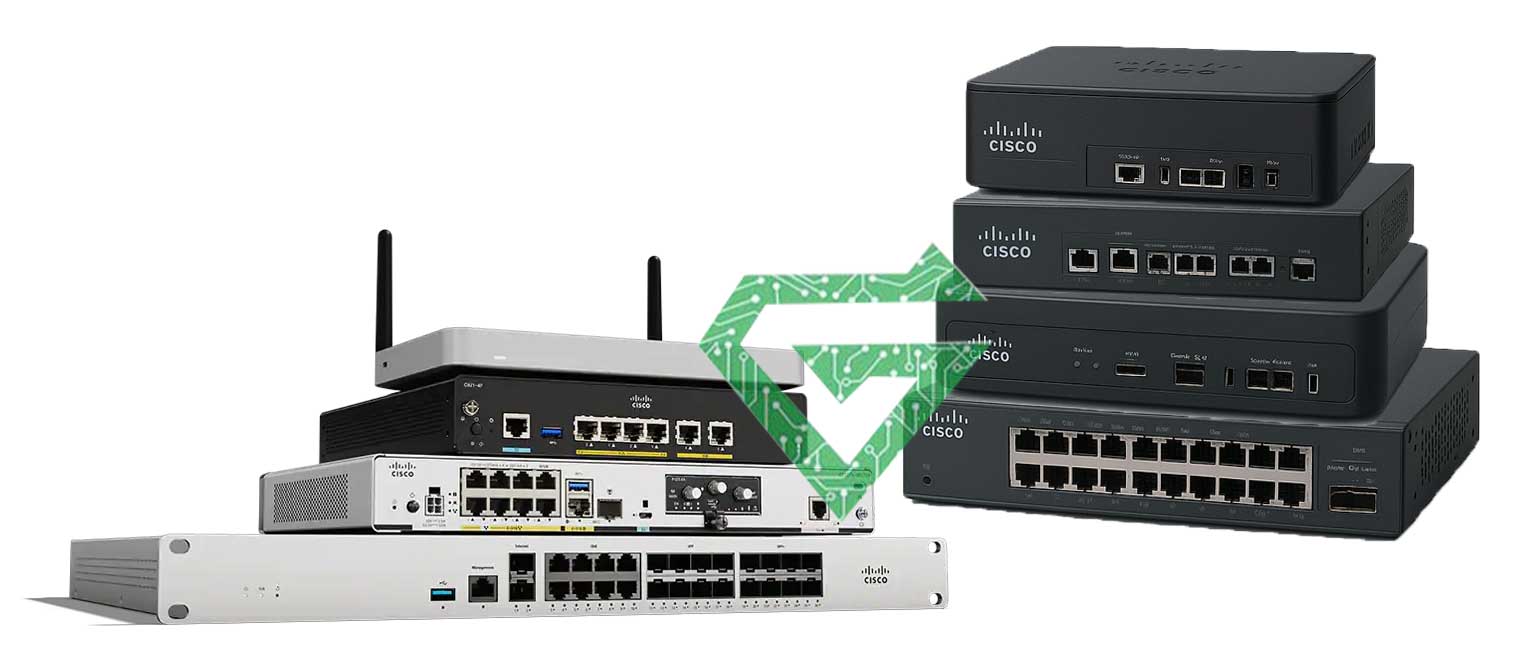
How does a cisco router work?
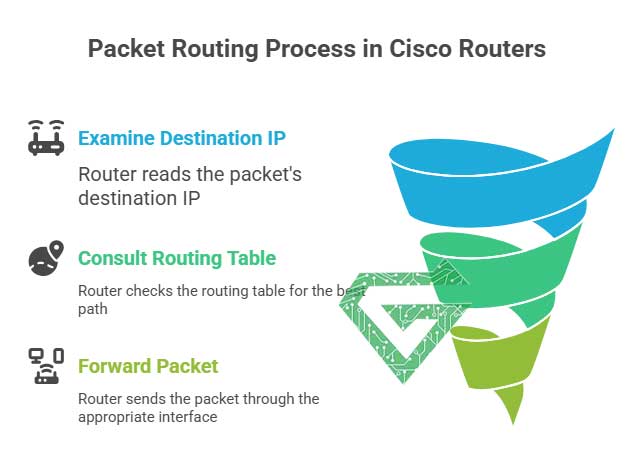
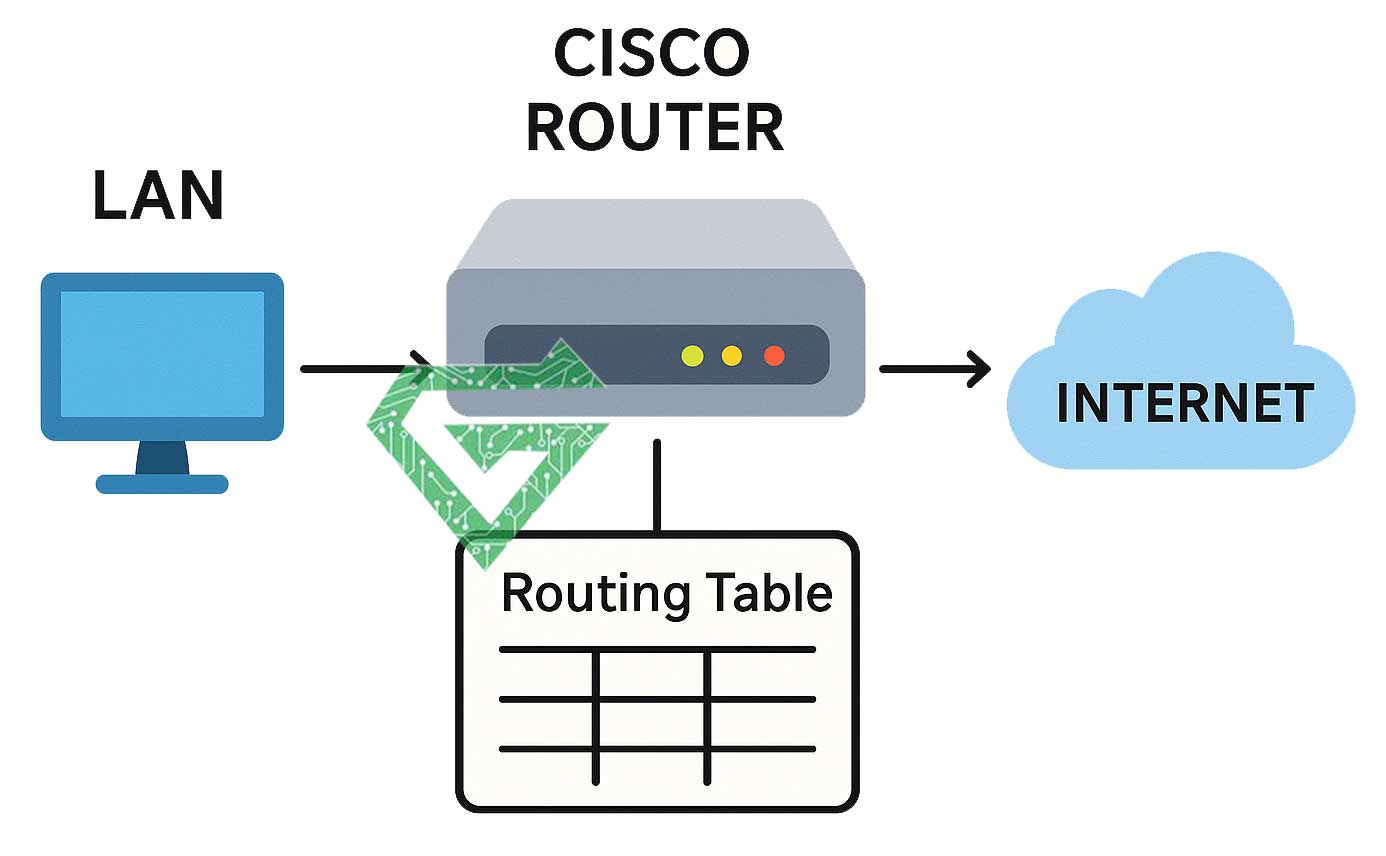
A Cisco router works by connecting different networks and directing data packets between them. When a packet arrives at the router, it examines the destination IP address in the packet’s header and consults its routing table a map of networks and paths to determine the best route. The router then forwards the packet through the appropriate interface toward its destination.
Routing tables can be populated manually with static routes or dynamically using protocols like OSPF, EIGRP, or BGP. Cisco routers can also perform functions like Network Address Translation (NAT) to allow multiple devices to share a public IP and basic firewall filtering to control traffic.
High-performance routers use mechanisms like Cisco Express Forwarding (CEF) to quickly forward packets using pre-built forwarding tables, ensuring efficient communication between local networks (LANs) and external networks such as the internet.
Different types of Cisco Router by organization size and usage scenario:
Cisco offers a variety of routers designed to meet the needs of different network sizes and environments. These routers are generally categorized into three main types: branch routers, enterprise routers, and service provider routers.
- Branch routers are designed for small offices, remote locations, or branch offices of larger organizations. They are compact, cost-effective, and provide essential connectivity features such as internet access, VPN support, and basic routing protocols. Popular models include the Cisco 800 and 900 series. These routers are ideal for small networks that require reliable connectivity and security without complex configurations.
- Enterprise routers are more powerful and suited for medium to large organizations that require higher throughput, advanced routing capabilities, and robust security. The Cisco 4000 series is a common example. These routers support multiple interfaces, advanced routing protocols like OSPF, EIGRP, and BGP, and features such as NAT, Quality of Service (QoS), and inter-VLAN routing. They are designed to handle larger traffic volumes, connect multiple branch offices, and provide secure and scalable network operations.
- Service provider routers are designed for Internet Service Providers (ISPs) or very large enterprises that need extremely high performance, reliability, and scalability. Models such as the Cisco ASR (Aggregation Services Routers) and CRS (Carrier Routing System) series fall into this category. These routers handle massive amounts of data, support advanced routing protocols and network virtualization, and offer redundancy and failover capabilities to ensure uninterrupted service. They are built to operate continuously under heavy network loads and provide sophisticated features for large-scale networks.
Different types of Cisco Router by network function or connection type:
- Core routers are high-capacity routers used in the backbone of large networks, such as the central network of an ISP or a large enterprise. Their primary role is to route data at very high speeds between other routers within the core network, rather than directly to end users. Core routers focus on performance, reliability, and redundancy to ensure uninterrupted traffic flow.
- Edge routers (also called gateway routers) are positioned at the boundary between a local network and external networks, such as the internet. They handle incoming and outgoing traffic, enforce security policies, and often support functions like NAT (Network Address Translation) and VPN connections. Edge routers are essential for connecting a company’s network to the outside world safely.
- Wired routers are traditional routers that connect devices using physical Ethernet cables. They provide stable and fast connectivity for offices, data centers, and home networks. While they may also include wireless capabilities in some models, wired routers are typically used where speed and reliability are critical.
- Broadband routers are routers specifically designed to work with broadband internet connections, such as DSL, cable, or fiber. They often combine a modem and a router into one device and provide features like NAT, firewall protection, and DHCP for small offices or home networks.
- Virtual routers: Software-based routers that run on servers or in the cloud, useful for flexible and scalable network setups.
- Industrial routers: Routers designed for harsh environments, such as factories or remote monitoring stations, which require durability and specialized connectivity.
- Wireless routers: Routers that provide Wi-Fi connectivity in addition to wired connections, commonly used in homes and offices.
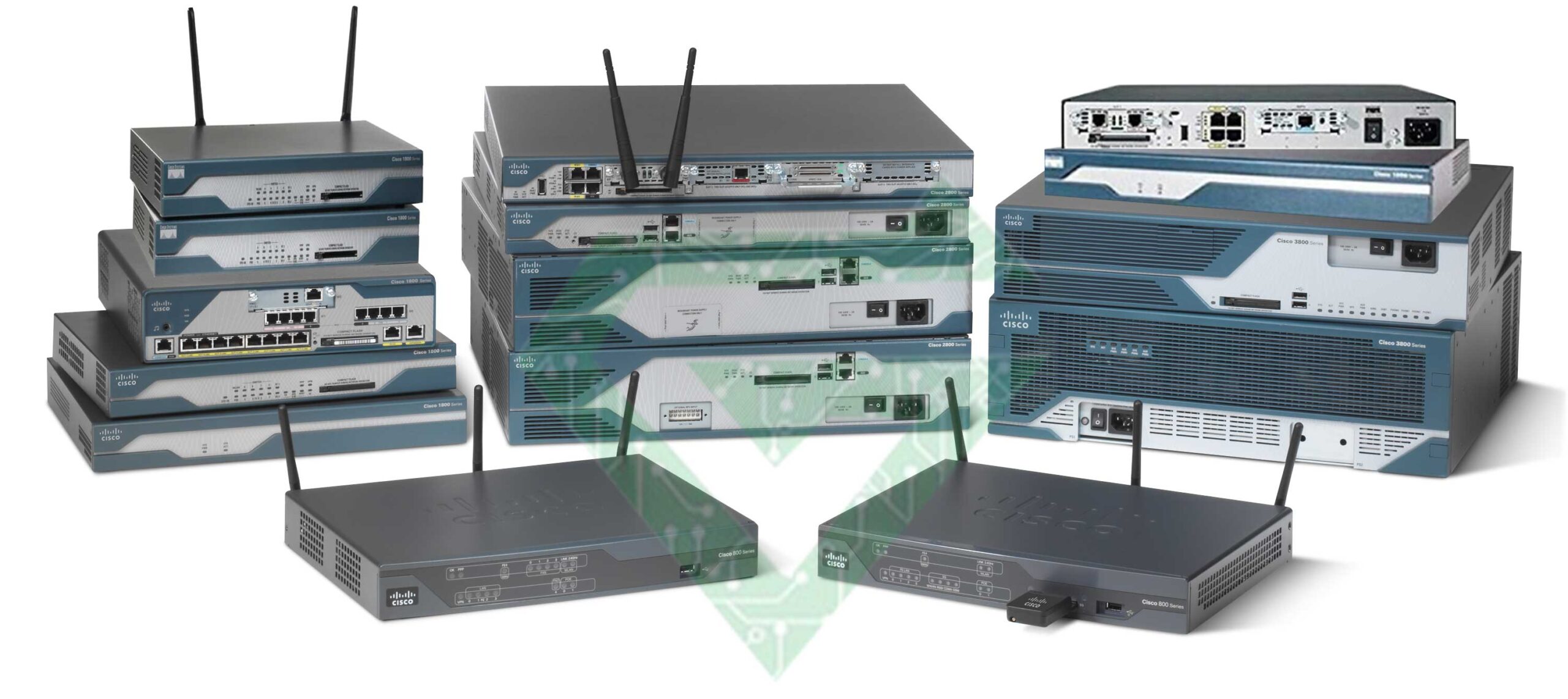
Uses of cisco Router:
Cisco routers are versatile networking devices used to connect networks, manage traffic, and provide secure and reliable communication. One of the primary uses of a Cisco router is connecting different networks, such as linking a company’s local area network (LAN) to the internet or connecting multiple branch offices together. This allows seamless communication between devices across different locations.
Another important use is routing and directing traffic efficiently. Cisco routers determine the best path for data to travel using routing protocols like OSPF, EIGRP, and BGP. This ensures fast and reliable delivery of information, even in large and complex networks.
Security is another key use of Cisco routers. They can implement firewalls, access control lists (ACLs), and VPNs to protect network data from unauthorized access or attacks. Many organizations use Cisco routers to secure remote connections for employees, ensuring safe access to corporate resources.
Cisco routers also provide network management and optimization features. They support Quality of Service (QoS) to prioritize critical traffic, Network Address Translation (NAT) to manage IP addresses, and DHCP services to automatically assign IPs to devices. These functions make network administration easier and improve overall network performance.
In addition, Cisco routers are used in large-scale enterprise and service provider networks to connect multiple high-speed links, manage heavy traffic loads, and provide redundancy for uninterrupted network operation. They are critical in scenarios where reliability, scalability, and high performance are required.
Different Ports in cisco Router:
Ethernet Ports:
- Used for wired connections to switches, computers, and other routers.
- Support various speeds: Fast Ethernet (100 Mbps), Gigabit Ethernet (1 Gbps), or 10 Gigabit Ethernet.
Serial Ports: Traditionally used for WAN connections, such as leased lines or long-distance router links.
Fiber Optic Ports: Provide high-speed connectivity for backbone networks and data centers.
Console Port: Used for initial setup and direct configuration via terminal or computer.
Auxiliary (AUX) Port: Allows remote management through a modem connection.
Management Ethernet Port (Out-of-Band): Enables network administrators to manage the router separately from main network traffic.
Modular Slots: Allow addition of specialized interface cards or ports (Ethernet, serial, WAN) for flexibility and scalability.
LED Indicators: Located near ports to show link status, activity, and errors for quick troubleshooting.
Buying Cisco Router in Dubai:
Looking for a high-performance Cisco router at the best price in Dubai? Atech.ae has you covered! Whether you need a router for a small office, a large enterprise, or a service provider network, we offer authentic Cisco routers with advanced features, reliability, and full support. Connect your networks, secure your data, and optimize your traffic with the latest Cisco technology—all at competitive prices. Don’t compromise on quality trust Atech.ae for your networking needs in Dubai and experience seamless, high-speed connectivity today! Shop now at atech.ae and take your network to the next level.