


PTZ CCTV Camera

CCTV was invented to allow people to observe and record activities in specific areas without being physically present. Its initial use in military applications quickly spread to civilian purposes, especially in crime-prone or high-security environments.
Over time, it became a key tool in urban safety and surveillance infrastructure. The most target of CCTV inventing are; The original uses of CCTV is Real-time monitoring of sensitive areas, then Adopted in the 1960s–70s in banks, shops, and public spaces and finally the goal of it is deter crime, gather evidence and improve safety. PTZ is one type of CCTV camera that we will continue to discuss in more detail, so follow us to end.
What Is a PTZ CCTV Camera?
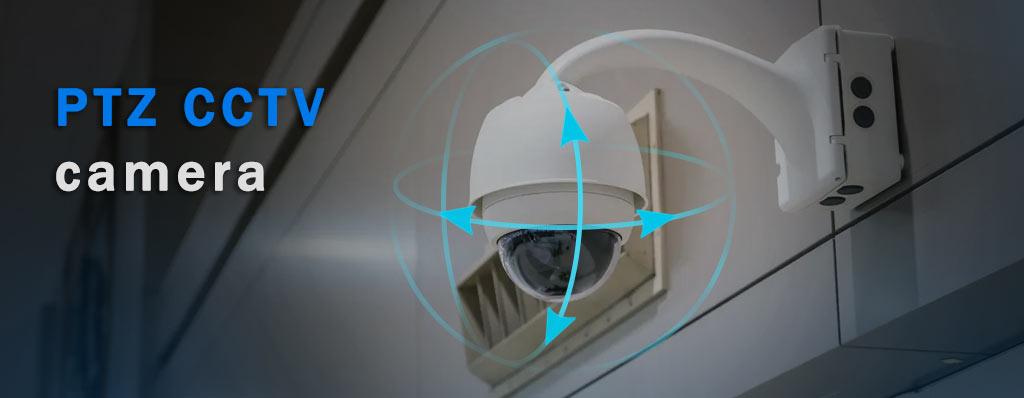
PTZ actually stands for pan tilt zoom. This CCTV camera has the ability to rotate horizontally and vertically and zoom in on the target. These cameras are in the category of dome cameras in terms of appearance. But the difference between a PTZ camera and a dome camera is in its features. PTZ cameras have more features and capabilities, which we will explain to you in detail below.
You may also know or hear the PTZ CCTV camera by other names such as rotating camera, speed dome camera or fast dome, all of which mean the same PTZ camera.
A PTZ camera is a dynamic surveillance tool that allows operators (or automated systems) to actively control the camera’s direction and zoom. This makes them ideal for live monitoring and large-area surveillance.
Unlike fixed cameras that only monitor one static angle, PTZ cameras can actively move and focus on different areas or objects. This makes them ideal for real-time monitoring in large or dynamic environments.
- PTZ = Pan (side-to-side movement), Tilt (up and down movement), Zoom (magnification of the image, often optical)
- Pan: Moves the camera left and right.
- Tilt: Moves the camera up and down.
- Zoom: Optical zoom allows close-up viewing without losing quality.
Why PTZ Cameras Were Developed:
- Limitation of fixed cameras: Can only view one direction leads to blind spots.
- Need: Wider coverage with fewer devices.
- Solution: A camera that can move and zoom enter PTZ.
As surveillance needs grew especially in large or complex environments fixed cameras proved insufficient. They couldn’t adapt to moving targets or cover wide areas without deploying many units. PTZ cameras were created to overcome this, offering flexible viewing angles and zoom capabilities in a single device.
Features of PTZ Cameras:
These features make PTZ cameras extremely useful in active security environments, where live or remote control is necessary.
- Optical Zoom: Up to 30x or more sharp detail even at long distances.
- Auto-Tracking: Follows moving subjects automatically.
- Preset Tours: Camera moves between saved positions on a schedule.
- Remote Control: Managed via computer, phone, or joystick.
- Night Vision: Infrared or low-light sensors.
- Weatherproofing: Outdoor models withstand rain, wind, dust.
- Pan: Horizontal movement up to 360° rotation.
- Tilt: Vertical movement typically from 0° to 90° or more.
- Zoom: High optical zoom (e.g., 20x–40x) for detailed images.
- Remote control: Operators can control movement and zoom from a computer, joystick, or mobile app.
- Weather resistance: Outdoor PTZ cameras are designed for harsh conditions.
Types of PTZ Cameras
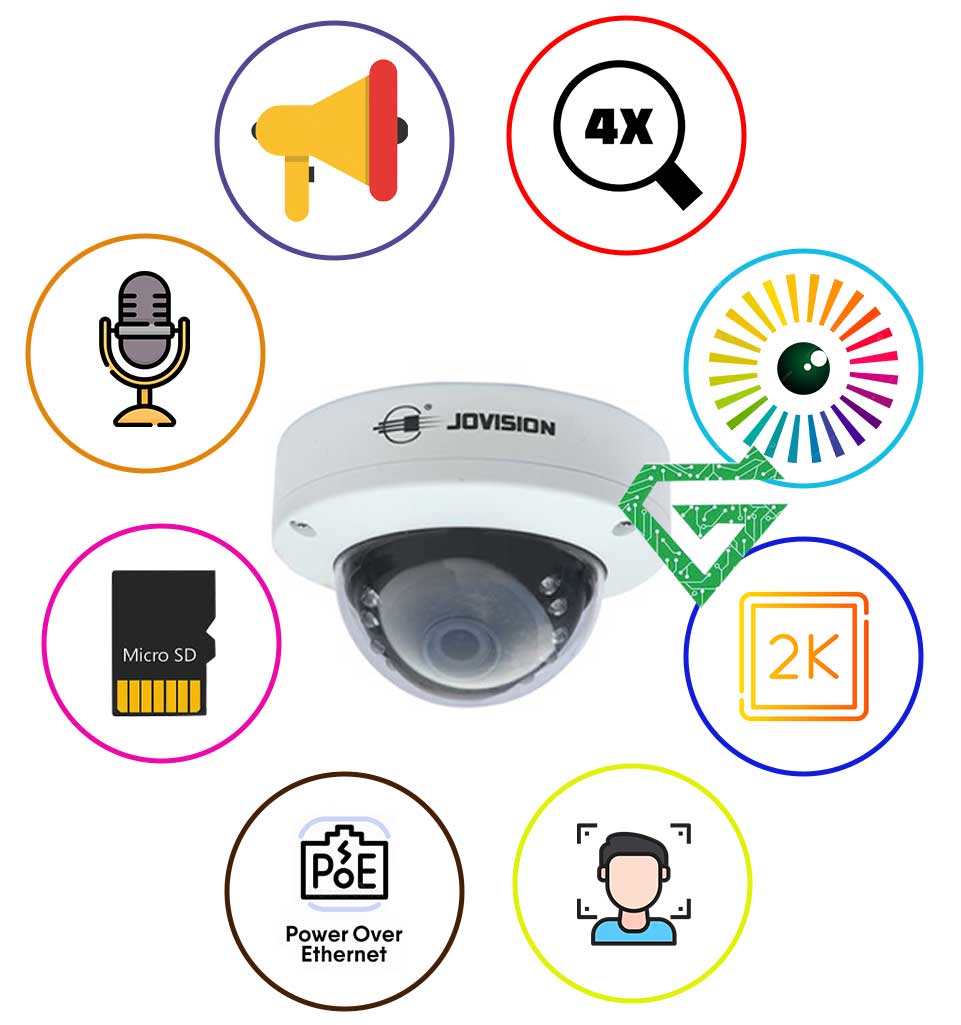
Different types are available to fit various system architectures and installation environments. IP-based PTZs (IP Camera) are more modern and preferred in new systems.
- Analog PTZ: Works with traditional DVRs; basic controls.
- IP PTZ: Connects via network; supports HD resolution and smart features.
- Indoor vs. Outdoor: Outdoor models have weather protection.
- Speed Dome PTZ: High-speed rotation and zoom, ideal for critical areas.

Advantages of PTZ Cameras
PTZ cameras are especially useful where active monitoring is in place, such as city surveillance, airports, or shopping malls.
- Wide Coverage: One PTZ can replace several fixed cameras.
- Flexible Monitoring: Real-time control and movement.
- Zoom Capability: Identify faces, license plates, and details.
- Cost-Efficient: Reduces the number of cameras needed in some cases.
Disadvantages of PTZ Cameras
- Mechanical Wear: Moving parts may fail over time.
- Limited Recording: Only records what it’s pointed at.
- High Cost: More expensive than fixed cameras.
- Operator Needed: Works best when someone actively controls it (unless auto-tracking is enabled).
Though powerful, PTZ cameras aren’t ideal for every situation. They’re best used alongside fixed cameras to ensure full coverage.
Read more: All about CCTV and its types
Does PTZ Replace Any Special Model?
Not exactly. PTZ cameras were not designed to replace a specific camera model, but rather to solve a set of problems that fixed cameras couldn’t handle alone. Such as;
- Multiple fixed cameras: In wide areas (like parking lots or stadiums), one PTZ can cover several angles that would otherwise need 3–4 fixed cameras.
- Manual repositioning: With fixed cameras, if you need to see another area, you’d have to physically install another camera or move the existing one. PTZ eliminated this need by allowing remote movement.
- Limited surveillance zones: PTZ allowed live tracking, replacing the need to wait and check multiple camera feeds for a moving subject.
What PTZ Cameras Do Not Replace:
- Fixed overview cameras: PTZ can only view one direction at a time. If something happens outside its current view, it may miss it. So, PTZ is not a replacement for fixed cameras used for 24/7 wide-angle recording.
- Covert or mini cameras: PTZ cameras are usually larger and noticeable—they don’t replace tiny hidden cameras used for discreet monitoring.
- Thermal or specialized cameras: PTZ cameras don’t replace thermal, fisheye, or 360° cameras that serve very specific roles.
Best Use: PTZ + Fixed Cameras Together
In most professional systems, PTZ cameras are used alongside fixed cameras:
- Fixed cameras give constant coverage.
- PTZ cameras give flexible, zoomed-in, detailed views when needed.
So, in summary, PTZ cameras were introduced to complement and enhance traditional systems not to fully replace any one model, but to reduce the number of cameras needed and add functionality that fixed models lacked.
Abilities of PTZ Cameras:
- Pan: Rotate the camera left and right (usually up to 360°).
- Tilt: Move the lens up and down (often up to 90° or more).
- Zoom: Optical zoom (e.g., 10x–40x or higher) to magnify distant objects without losing image quality.
- Auto Tracking: Automatically follow a moving object such as a person or car.
- Preset Positions: Save specific angles and zoom levels; the camera can return to them automatically.
- Patrol Mode (Tour): Move between multiple presets in a sequence—ideal for monitoring different zones regularly.
- Remote Operation: Control movement and zoom from a remote device (PC, mobile, control panel).
- Night Vision: Infrared or starlight sensors allow the camera to see in complete darkness.
- Smart Alerts: Integration with motion detection, line-crossing alerts, or intrusion zones.
- High-Speed Rotation: Ability to pan quickly (sometimes over 300°/sec), useful in emergencies.
- Scheduling & Automation: Program movement or activity based on time of day or triggered events.
- Weatherproof and Vandal-Resistant: Outdoor models are built to withstand rain, wind, and tampering.

Common Uses of PTZ Cameras
PTZ cameras are used in places where flexibility, wide coverage, and live control are important. Here are some major applications:
- City Surveillance / Public Spaces
- Monitor streets, parks, and intersections.
- Track moving vehicles or suspicious activity.
- Used in conjunction with fixed cameras for full coverage.
- Airports and Transportation Hubs
- Monitor terminals, runways, and baggage areas.
- Security staff can zoom in on unattended luggage or suspicious persons.
- Shopping Centers and Malls
- Cover large open spaces with fewer cameras.
- Zoom in on theft incidents or crowd movement.
- Parking Lots and Garages
- Follow vehicles or people through wide, open areas.
- Zoom on license plates or faces for identification.
- Industrial Sites and Warehouses
- Monitor machinery, deliveries, and employee safety from a distance.
- Useful in dangerous zones where constant manual monitoring isn’t safe.
- Stadiums and Event Venues
- Track crowd behavior in real time.
- Help spot emergencies or disturbances during events.
- High-Security Facilities
- Used in prisons, military bases, or sensitive research labs.
- Allow guards to monitor and follow movements precisely.
Why PTZ Cameras Are Useful:
- Reduce the number of cameras needed.
- Allow detailed observation of events.
- Provide live, responsive control in critical situations.
- Great for both manual and automated surveillance tasks.
Conclusion:
PTZ CCTV cameras offer a wide range of intelligent abilities that make them one of the most versatile tools in modern surveillance. They can pan across an entire area, tilt to focus on elevated or low angles, and zoom in to capture fine details like faces or license plates. These movements can be fully automated or controlled manually in real time.
Many PTZ models include smart features such as auto-tracking of moving subjects, preset patrol routes, and motion-based alerts. Their ability to rotate at high speed and see in total darkness makes them ideal for both day and night use. Additionally, outdoor PTZ cameras are designed to resist weather and vandalism, making them reliable in demanding environments. Atech.ae is one of the biggest company in selling network equipment specially IP CCTV, Jovision CCTV, Cisco switch in Dubai. You can read our other articles in Atech blog. if this post was useful, share your idea with us in comment place.