


What is Cisco network module


Software applications include many different tasks and processes that cohesively serve all paradigms within a complete business solution. Early software versions were gradually built from an original and basic level, and development teams did not yet have the ability to use prewritten code.
The introduction of modularity allowed programmers to reuse prewritten code with new applications. Modules were created and bundled with compilers, in which each module performed a business or routine operation within the program.
So, module can be really necessary for business. A famous and valid company (cisco) designs and produces it to the world. So, follow this article to know “What is Cisco network module?”
What is Cisco network module:
A Cisco network module is a hardware component that can be inserted into a Cisco router or switch to provide additional functionality. These modules are designed to expand the capabilities of the network device and enhance its performance.
Depending on the specific module, it can offer features such as additional Ethernet ports, fiber connectivity, wireless connectivity, voice services, security services, storage capabilities and other products of network equipment. The network module acts as an interface between the router or switch and the network, allowing for the integration of various technologies and protocols to meet the specific needs of the network infrastructure.
Uses of Cisco network module:
- A Cisco network module is an expansion card that can be installed in a Cisco router or Cisco switch to enhance its functionality and connectivity options. These modules provide additional ports, interfaces, and features that enable organizations to expand their network capabilities and accommodate the growing demands of their network infrastructure.
- One of the primary uses of a Cisco module is to increase the number of available ports on a router or switch. This allows for more devices to be connected to the network, whether they are computers, servers, printers, or other networking devices. By increasing the number of ports, organizations can easily scale their network to meet the needs of their expanding business.
- expanding port capacity, network modules also provide connectivity options for different types of networks. For example, a network module may support Ethernet ports for connecting devices within a local area network (LAN), or it may support wide area network (WAN) interfaces such as T1/E1, T3/E3, or DSL for connecting to remote locations or the internet. This flexibility in connectivity options allows organizations to tailor their network infrastructure to their specific requirements.
- Cisco network modules often come with advanced features and technologies that enhance network performance and security. For example, modules may include built-in security features like firewall capabilities or VPN support to ensure data privacy and protect against unauthorized access. They may also offer advanced routing protocols or Quality of Service (QoS) features to optimize network traffic and prioritize critical applications.
- Cisco network modules continue to evolve to keep up with the ever-increasing demands of modern networks. They now support higher data transfer rates, such as 10 Gigabit Ethernet or even 40/100 Gigabit Ethernet, to accommodate bandwidth-intensive applications and high-speed connectivity requirements. Additionally, network modules are becoming more modular and flexible, allowing organizations to mix and match different types of modules to create a customized network solution that meets their unique needs.
Totally, a Cisco network module is a crucial component that expands network capabilities and connectivity options. It enables organizations to scale their networks, connect to various types of networks, and leverage advanced features to optimize performance and security. With the continuous advancements in technology, these modules are adapting to meet the evolving needs of modern networks.
Performance of Cisco network module:
- A Cisco network module is a hardware component that is designed to enhance the performance and scalability of a network infrastructure. It is typically used in Cisco routers or switches to add additional functionality and expand the capabilities of the network.
- One of the first functions of a Cisco network module is to improve network performance. It achieves this by offloading certain tasks from the main processing unit of the router or switch, thereby freeing up resources and improving overall system performance. For example, a network module may include specialized hardware for handling encryption and decryption processes, which can significantly improve the performance of secure network communications.
- Scalability is another key benefit provided by Cisco network modules. As network traffic increases and the demands on the network infrastructure grow, additional modules can be added to accommodate the increased workload. This allows organizations to easily scale their networks without having to replace or upgrade their existing equipment.
- Another thing of performance and scalability is Cisco network modules may also provide additional features and capabilities. For example, they may include integrated security features such as firewall or intrusion prevention capabilities, enabling organizations to enhance the security of their networks without the need for separate devices.
- In addition, Cisco regularly updates its network modules to keep up with the latest advancements in technology and industry standards. This ensures that organizations can leverage the latest features and functionalities to optimize their network performance and stay ahead in an ever-evolving digital landscape.
- Overall, a Cisco network module plays a crucial role in improving network performance and scalability. By offloading tasks, adding specialized hardware, and providing additional features, these modules enable organizations to build robust and efficient network infrastructures that can meet the demands of modern-day connectivity.
Integration and management of Cisco network module:
- A Cisco network module is a hardware component that is designed to enhance the functionality and performance of Cisco networking devices. These modules are typically installed in routers, switches, or other networking equipment to provide additional features and capabilities.
- One of the primary functions of a Cisco network module is integration and management. It allows for the seamless integration and centralized management of network components. This means that multiple networking devices can be connected and managed from a single interface, making it easier for network administrators to monitor and control the network.
- Additionally, Cisco network modules often come with advanced features that enhance network performance and security. For example, some modules may provide additional ports for connecting more devices to the network, while others may offer advanced security features such as firewall protection or intrusion prevention.
- These years, the concept of network modules has evolved to adapt to the changing needs of modern networks. With the rise of cloud computing and the Internet of Things (IoT), network modules now also focus on enabling the integration and management of these emerging technologies. This includes supporting virtualization, software-defined networking (SDN), and network function virtualization (NFV), which allow for greater flexibility and scalability in network deployments.
- eventually, a Cisco network module plays a crucial role in enhancing the functionality, performance, and security of a network. It enables seamless integration and centralized management of network components, while also adapting to the latest trends and technologies in the networking industry.
Read more: what is Cisco Switch
what is optical modules?
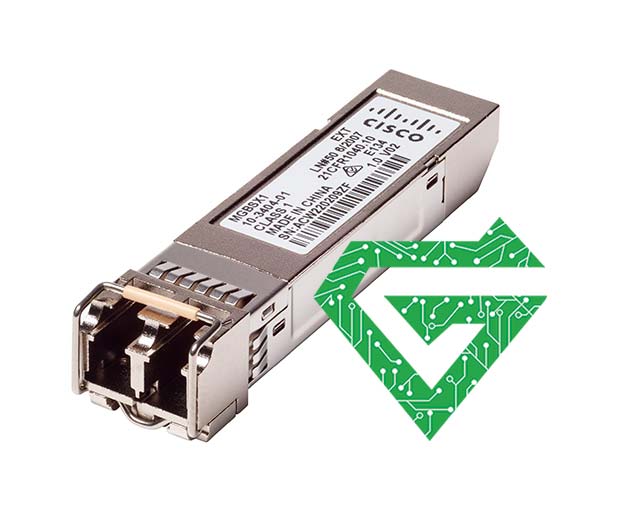
There is another kind of module that produces in cisco company, its name is optical module. Optical module is a photoelectric converter consisting of optoelectronic components (transmitter and receiver), functional circuit, and optical ports. To put it simply, optical modules are used for photoelectric conversion. The transmitter converts electrical signals into optical signals for transmission over optical fibers, and the receiver converts received optical signals into electrical signals.
Bidirectional (BiDi) optical module: An optical module that transmits data through only one fiber. Unlike general optical modules with two ports (Tx and Rx), BiDi optical modules have only one optical port and use wavelength division multiplexing (WDM) technology to transmit and receive optical signals of different center wavelengths over the same fiber. BiDi optical modules must be used in pairs.
Colored optical module: An optical module that emits laser beams with wavelengths varying slightly around the center wavelength. It can be used directly on a multiplexer and has a standard wavelength.
Wavelength: The distance that a wave can be transmitted in a vibration cycle, that is, the distance between two adjacent points with a 2π difference in vibration phases on the wave transmission path. The wavelength λ is the product of wave velocity u and period T (λ = uT). Waves of the same frequency are transmitted at different speeds in different media and therefore have different wavelengths. For example, the 850 nm wavelength is for short-range transmission, 1310 nm for short/medium-range transmission, and 1550 nm for long/ultra-long-range transmission.
Different types of Cisco network module:
- Cisco 2800/3800 Series T3/E3 ATM Network Module: The Cisco T3/E3 ATM Network Module provides ATM WAN connectivity for enterprise regional and branch office connectivity on the Cisco 2800 and 3800 Series Integrated Services Routers. This combined T3/E3 ATM network module provides an ATM connection of either 44 Mbps for DS3/T3, or 34 Mbps for E3 using standard 75-ohm BNC connectors. Support is provided for the AAL5 framing standard, as well as ATM Traffic Management support for Unspecified Bit Rate (UBR), UBR+ (For switched virtual circuits [SVCs] only), Variable Bit Rate real-time (VBR-rt), VBR non-real-time (VBR-nrt), constant bit rate (CBR), and available bit rate (ABR) classes of traffic. T3/E3 WAN access enables your network to carry high volumes of data and multimedia content, while providing low latency for voice over IP (VoIP).
- Cisco 2600/3600/3700 Series 1-Port Gigabit Ethernet Network Module: The Gigabit Ethernet Network Module for the 2600/3600/3700 Series of access routers accelerates applications such as metropolitan access, inter-VLAN routing, and high-speed connectivity to LAN switches.
- Cisco 2600/3600/3700 Series T3/E3 Network Module: The Cisco T3/E3 Network Module provides high-speed WAN access for the Cisco 2600, 3600 and 3700 Series access routers. T3/E3 WAN access enables the network to carry high volumes of data and rich multimedia content, while providing low latency for voice over IP.
- Cisco ASR 1000 Series 40-Gbps Embedded Services Processor: The Cisco ASR 1000 Series Embedded Services Processors (ESPs) offer innovative new capabilities for forwarding and queuing in silicon. The Cisco ASR 1000 Series 40-Gbps ESP is supported on the Cisco ASR 1006 and 1013 Routers. On the Cisco ASR 1006 and 1013 Routers, the ESP can be deployed in a redundant configuration.
The Cisco ASR 1000 Series ESPs handle data-plane processing tasks for all network traffic. The modules perform all baseline router packet operations, including:
-MAC classification
-Quality-of-service (QoS) classification, policing, and shaping
-Security access control lists (ACLs)
-VPNs
-Load balancing
-NetFlow
They are also responsible for advanced services such as:
-Zone-based firewall
-Encryption services
-Network-Based Application Recognition (NBAR)
-Network Address Translation (NAT)
-Flexible packet matching (FPM)
Supported Platforms: Cisco ASR 1006 Router and Cisco ASR 1013 Router
- Cisco Catalyst 6000 24-Port FXS Analog Interface Module: The Catalyst FXS Analog Interface Module integrates legacy analog devices into the campus multiservice network within Cisco AVVID (Architecture for Voice, Video, and Integrated Data). By providing legacy analog devices with access to the benefits of the campus multiservice network, the useful life and thus the return on investment (ROI) of these devices can be maximized. Migration to a fully converged multiservice network is also simplified.
- Cisco Catalyst 6000 Multilayer Switch Feature Card MSFC2: WS-X6K-S1A-MSFC2, The Multilayer Switch Feature Card (MSFC2) For the Catalyst® 6500 Series delivers high performance multilayer switching and intelligent network services for both service provider and enterprise environments. The MSFC2, in combination with the Policy Feature Card (PFC), provides IP, IPX® and IP Multicast switching. The MSFC2 is a Cisco IOS® router in a compact package and, when used in combination with the PFC, provides intelligent multilayer switching for the Catalyst 6000 Family in a single slot solution.
- Cisco Catalyst 4500 Series 48-Port 100 BASE-X SFP Line Card: The Cisco Catalyst 4500 Series 48-port, nonblocking, 100BASE-X line card allows customers to combine various SFP optics based on the network need. One to forty-eight 100BASE-X SFP optics can be populated on a single line card, as 100BASE-X SFP optics are optional.
Customers can take advantage of the line cards flexibility, which provides: SFP optics support, including -100BASE-FX, 100BASE-LX10, 100BASE-BX-D, and 100BASE-BX-U
-A flexible alternative to the Cisco Catalyst 4500 Series fixed 100BASE-X line cards
-Enterprise and commercial applications: For fiber-to-the-desktop
-Metro Ethernet: For service providers running point-to-point Fast Ethernet to the home or business
- Cisco Catalyst 4500 Series Supervisor Engine II-Plus: The Cisco Catalyst 4500 Series Supervisor Engine II-Plus is a Cisco IOS Software-based supervisor engine that meets the needs of value-conscious customers seeking a flexible and scalable LAN solution. Optimized for wiring closets for medium-sized enterprises, education customers, or small enterprises or branch offices, the Supervisor Engine II-Plus provides the resiliency and control for converged data, voice, and video networks. The Supervisor Engine II-Plus delivers non-blocking Layer 2 switching with basic Layer 3 and Layer 4 intelligent services to power resilient, multilayer switching solutions for converged data, voice, and video networks. It allows customers to deploy network-wide intelligent services, such as advanced quality of service (QoS), comprehensive security, and management with optimal control and resiliency. Compatible with the widely deployed Cisco Catalyst 4503, 4506, 4507R, and 4006 chassis, and with existing Cisco Catalyst 4500 Series line cards, the Supervisor Engine II-Plus helps to ensure an extended window of deployment of the modular Cisco Catalyst 4500 Series.
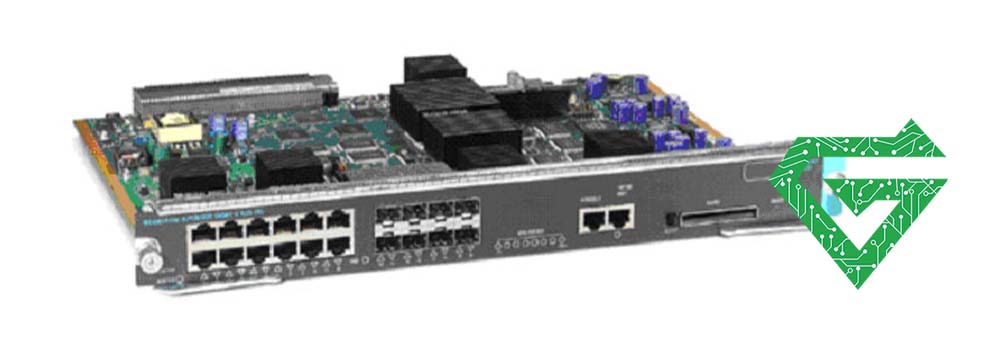
- Cisco Catalyst 4500 Series Supervisor Engine II-Plus-TS: Exclusive to the Cisco® Catalyst® 4503 Switch chassis, the Catalyst 4500 Series Supervisor Engine II-Plus-TS (Figure 1) is a 64-Gbps, 48-million packets per second (mpps) Layer 2 through 4 switching Engine with 12 ports of wire-speed 10/100/1000 802.3af Power over Ethernet (PoE) and 8 wire-speed Small Form-Factor Pluggable (SFP) ports directly on the supervisor faceplate. These additional ports scale the maximum density of the Catalyst 4503 to 116 ports when deployed with a Catalyst 4500 Series Supervisor Engine II-Plus-TS. The addition of this new supervisor engine allows the Catalyst 4503 to deliver scalability, innovative security, integrated reliability, and flexibility that is affordable and easy to use for the medium-sized business. Optimized for small offices, the Cisco Catalyst 4500 Series Supervisor Engine II-Plus-TS (Figure 2) provides a highly flexible and scalable deployment alternative to medium-sized businesses for end-user and server connectivity.
- Cisco Catalyst 4500 Series Supervisor Engine V-10GE: The Cisco Catalyst 4500 Series Supervisor Engine V-10GE offers non-blocking, Layer 2-4 switching with wire-speed 10-Gigabit Ethernet uplinks, increasing the Catalyst 4500 Series overall performance to 136-Gbps capacity and 102-mpps throughput. In addition to the dual wire-speed 10-Gigabit Ethernet ports (X2 optics) Supervisor V-10GE also includes four alternative wired gigabit Ethernet ports (Small Form-Factor Pluggable [SFP] optics) on the faceplate to maximize the flexibility of deployment options. This combination of Gigabit Ethernet and 10 Gigabit Ethernet ports allows for network future proofing providing an easy migration path from Gigabit Ethernet to 10 Gigabit Ethernet by simply adding 10 Gigabit Ethernet optical interfaces. The Cisco Catalyst 4500 Series Supervisor Engine V-10GE supports Stateful Switch Over (SSO), which enables sub-second supervisor engine failover resulting in continuous connections for IP phone calls and Wireless Access Points therefore eliminating disruptions to users. Integrated NetFlow ships standard on Supervisor V-10GE for more comprehensive network visibility, security and manageability.
- Cisco Catalyst 4500 Supervisor Engine 6-E: Cisco Catalyst 4500 Supervisor Engine 6-E with CenterFlex Technology. Industry-Leading Centralized Performance. The Cisco Catalyst 4500 Supervisor Engine 6-E with CenterFlex technology is an intelligent, high-performance, next-generation extension to the Cisco Catalyst 4500 Series optimized for customers deploying business-critical applications. CenterFlex technology is enabled by Cisco developed application-specific integrated circuits (ASICs) specific to the Supervisor Engine 6-E that deliver industry-leading centralized performance and configuration flexibility.
-320Gbps switching fabric 250mpps Layer 2, 3, and 4 throughput.
-Supported in classic and E-Series chassis
-Simultaneously supports classic and E-Series line cards with no performance degradation
-Twin Gigabit converter module support: 2x10GbE or 4x1GbE SFP port (ships standard)
-IPv6 in hardware
-Optimized for simultaneous IPv4 and IPv6 deployments or migration
-Dynamic QoS, security and IPv6 resource optimization to optimize services
-User-configurable queuing with 8 queues per port
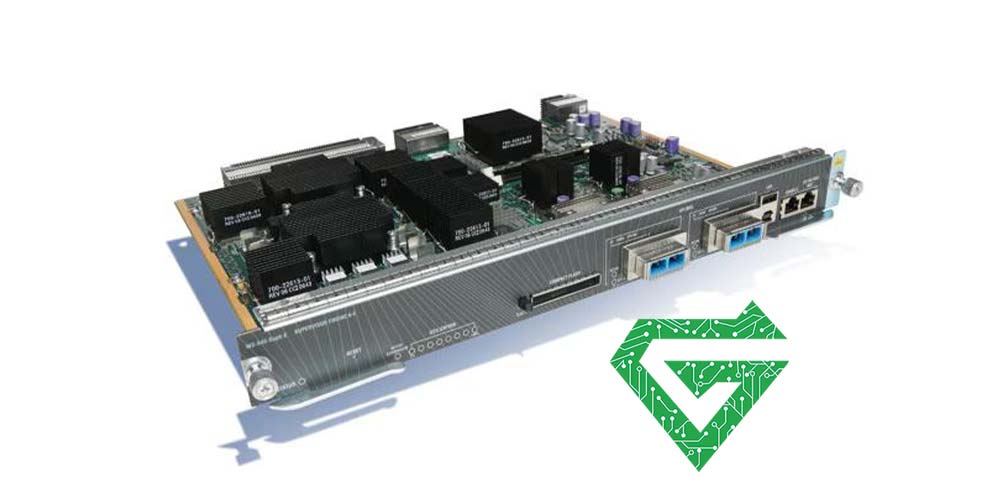
- Cisco Catalyst 4500E Supervisor Engine 8-E: Converge Wired and Wireless Networks. The new Cisco Catalyst 4500E Supervisor 8-E helps to enable the Cisco Unified Access solution on the world’s most widely deployed modular access switch—Cisco Catalyst 4500E. It brings the best of wired and wireless technologies together while preserving investment on existing wired infrastructure. It supports full wireless LAN controller functionality and common features across wired and wireless networks.
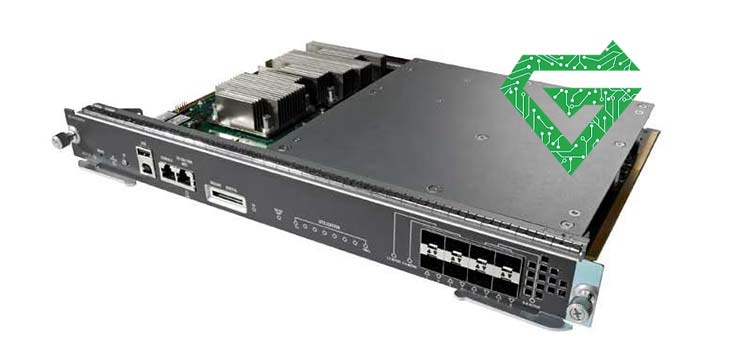
- Cisco Catalyst 4500E Supervisor Engine 8L-E: Get maximum investment protection in modular access. The Supervisor 8L-E is based on our best-selling Cisco Catalyst 4500 Supervisor Engine 8-E architecture, and delivers the same features for lower scale deployments. It offers twice the number of Small Form Factor Pluggable (SFP) and SFP Plus (SFP+) uplinks and a more powerful CPU than the Supervisor 7L-E.
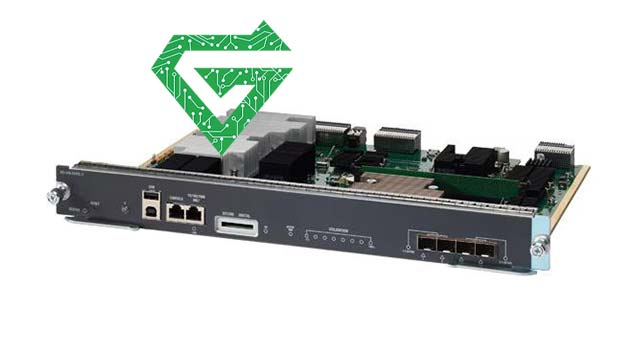
- Cisco Catalyst 4000/4500 Supervisor Engine IV: The Catalyst 4000/4500 Supervisor Engine IV delivers integrated resiliency and non-blocking Cisco Express Forwarding (CEF)-based Layer 2/3/4 switching at 48 Mpps to further enhance control of converged networks. Key intelligent services, based on proven Cisco IOS software, include granular Quality of Service (QoS), predictable performance, advanced security, comprehensive manageability and integrated resiliency. Integrated resiliency, via redundant Supervisor Engine IV support in a Catalyst 4507R, minimizes downtime for enterprise and service provider converged network deployments. The Supervisor Engine IV is compatible with the new Catalyst 4500 Series chassis, the widely deployed Catalyst 4006 chassis, and existing Catalyst 4000 Family line cards for maximum deployment flexibility.
-Cisco Catalyst 4006 Supervisor Engine 3
The Catalyst 4000 Family Supervisor Engine III delivers integrated, non-blocking, Cisco Express Forwarding (CEF)-based Layer 2/3/4 switching at 48 Mpps with intelligent services such as granular Quality of Service (QoS), advanced security, and comprehensive manageability for control of converged data, voice, and video networks.
–Cisco Catalyst 4000 Supervisor Engine 2
The Catalyst 4000 Family Supervisor Engine II delivers high performance Layer 2 switching at 24 Gbps, 18 Mpps with intelligent services, based on Catalyst OS, for enhancing LAN scalability, flexibility and security.
-Cisco Catalyst 4000 Family Line Cards
Compatible with both the Catalyst 4500 Series and the Catalyst 4000 Series modular chassis these linecards can be mixed and matched to suit a wide-range of customer wiring closet, branch office, data center and metro Ethernet deployments. Catalyst 4000 Family linecards offer high density copper and fiber-based interfaces for both Fast Ethernet and Gigabit Ethernet connectivity.
A variety of network infrastructure solutions are enabled by the Catalyst 4000 Family of switches including: Cisco AVVID Network Infrastructure, IP Telephony, Wireless LAN, Metro Ethernet Switching, Ethernet in the First Mile, and the CWDM GBIC Solution.
- Cisco Catalyst 4000/4500 Supervisor Engine V: Cisco Catalyst 4500 Supervisor Engine V: An extension of the Supervisor Engine IV offering higher capacity, nonblocking Cisco Layer 2-4 switching at 96 Gbps, with performance of 72 Mpps. Other enhancements include broadcast suppression in hardware, multicast suppression, enhanced QoS, and 802.1Q-in-Q in hardware. The Supervisor Engine V is required for the new Catalyst 4510R chassis and is compatible with all Catalyst 4500 Series chassis and existing Catalyst 4500 Series line cards for maximum deployment flexibility.
- Cisco Distributed Forwarding Card: WSFSK-DFC Daughter Card 32284-12. The Catalyst 6500 Distributed Forwarding Card is installed in DFC-enabled line-card modules that perform distributed forwarding supported by the Catalyst 6500 Supervisor Engine 2 as a field upgrade. These line cards include the WS-X6516-GBIC and the WS-X6816-GBIC.
- Cisco IP VSAT Satellite WAN Module: Non-terrestrial WAN Backup and Multicast Content Distribution. The Cisco IP VSAT Satellite WAN Network Module provides two-way broadband satellite connectivity on the Cisco 2800 and 3800 series Integrated Services Routers as well as the Cisco 2600XM, 2691, and 3700 series access routers. It supports Ku-band and C-band frequencies for transmission over the most widely available satellite capacity to provide:
-Business continuity: Satellite-based WAN backup is independent of terrestrial infrastructure and provides rapid recovery from disruptions due to service provider outages or disasters.
-High-quality video, audio, and content delivery: Satellite is ideal for the delivery of bandwidth intensive data and video content to multiple locations from a central site.
-Mobile communications for disaster recovery: With the Cisco IP VSAT module providing backhaul to the Internet using an auto-pointing portable VSAT antenna, you can put together a completely autonomous, rapidly deployable, and cost-effective communications kit.

- Cisco MGX 8850 Route Processor Module: The Cisco Route Processor Module Cisco (RPM) is a seamless integrated IP/MPLS services gateway for Cisco MGX 8000 Series Multiservice Switches leveraging industry leading Cisco IOS ® software. The Cisco RPM creates new and differentiated current services for ATM-based networks, such as voice over IP (VoIP) and IP-enabled Layer 2 service. The Cisco RPM also provides a Multiprotocol Label Switching (MPLS) control plane for emerging services and network architectures. The Cisco RPM-PR provides IP/MPLS services for the MGX 8230, MGX 8250, MGX 8830, MGX 8850 and MGX 8950 Multiservice Switches. The RPM-XF (Cisco RPM-XF) is a high-performance IP/MPLS gateway for the Cisco MGX 8850 and MGX 8950 Multiservice Switches, powered by Cisco PXFs innovative adaptive processing for highest service performance. The Cisco RPM-XF has an adaptive network processing technology based on Cisco’s patented Parallel Express Forwarding (PXF) architecture. The PXF network processor provides hardware-based forwarding and ease of programmability for flexible service delivery. The Cisco RPM-XF is built to provide high-performance edge services, high scalability, and reliability.
Cisco NAC Network Module for Integrated Services Routers
- Securing the Empowered Branch: Extend cost-effective network admission control to branches and help improve the security of the entire network with the Cisco NAC Network Module for Cisco Integrated Services Routers. This new module brings Cisco NAC Appliance Server capabilities to Cisco 2800, 2900, 3800, and 3900 Series Integrated Services Routers.
-Simplify Branch Network Management: The module extends the Cisco NAC Appliance portfolio of products to smaller locations. With the Cisco NAC Network Module, network administrators can manage a single device in the branch office for data, voice, and security requirements.
-Pervasive Security: NAC ensures that all incoming users and devices, including guests and unknown devices, comply with security policies. At branch offices, it ensures that potential threats are repaired locally before they cross the WAN.
-Consistent Policy: Policies can be established at headquarters and applied consistently across the entire organization to branch offices.
-Simple Deployment: Because the module fits into a Cisco integrated services router, customers enjoy easier deployment, troubleshooting, and management.
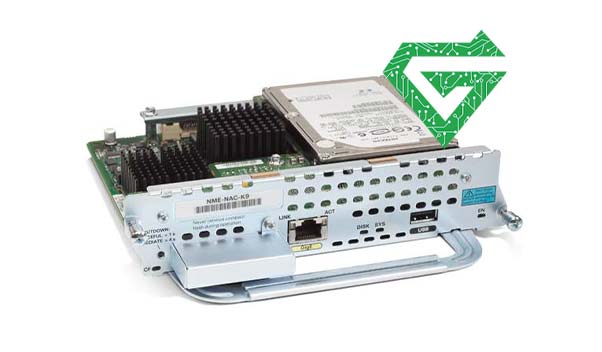
- Cisco Virtual Private Network Module: Provides up to 10 times the performance over software-only encryption by offloading the encryption processing from the router central processing unit. Plugs directly into the Cisco 1700 s internal expansion module slot.
Modular Router Solutions:
-VPN and Firewall
Supported Platforms and Minimum Cisco IOS Versions:
-3700 Series Not Available
-3660 Series Not Available
-3640 Not Available
-3620 Not Available
-2691 Not Available
-2600XM Series Not Available
-2650 Series Not Available
-2620 Series Not Available
-2610 Series Not Available
-1760 12.2(11)T
-1751 12.2(4)T
-1721 12.2(8)T
Read more: What is Network Card Module
- Cisco Wide Area Application Services (WAAS) Modules for ISR: Get a Faster Return on Investment
Cisco Wide Area Application Services (WAAS) solutions for Cisco Integrated Services Router (ISR) platforms help distributed organizations implement WAN optimization, with a fast return on investment. WAAS solutions for ISR platforms include:
-WAAS software on Cisco Services-Ready Engine (SRE) Modules
-WAAS software on Cisco UCS E-Series Servers
-WAAS software embedded in Cisco 4451-X Integrated Services Router
-Cisco Wide Area Application Services (WAAS) Express on IOS
Module vs Interface:
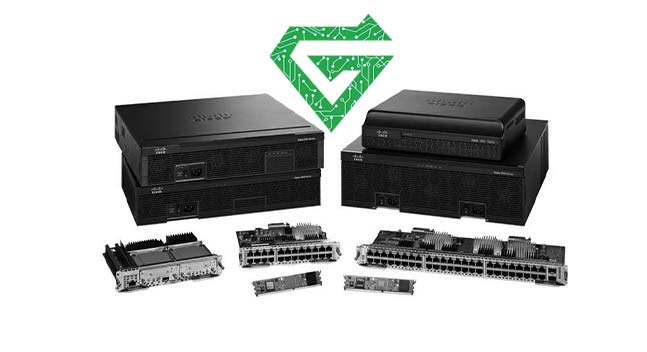
Maybe someone has the mistake about the meaning of module and interface. Now learn it forever; An interface is a particular port that provides a network communication capability. Physically, it is a socket into which you can plug an appropriate cable, Ethernet cable, phone cable for DSL connection, coaxial cable for CATV, serial cable for diverse WAN technologies, ISDN cables, etc.
But a module is a plugging card that you can insert into a router that contains the circuitry to provide you with one or more interfaces of the same type. In other words, a module carries one or more interfaces and allows you to extend the connectivity of your router according to your needs.