


What is SFP port

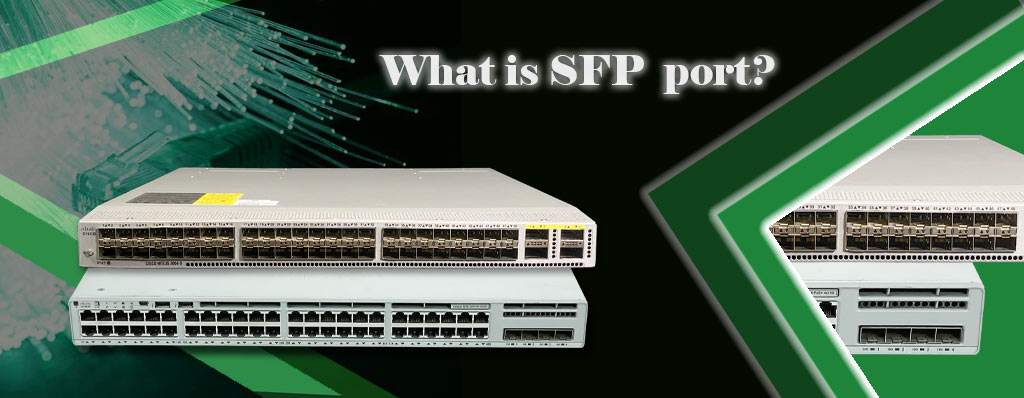
When you want to connect devices together with a network switch, there are different ports that can you use. These ports such as PoE port, RJ45 port, SFP port and more. Why do we use different types of port or what are their uses?
Before, we introduced PoE port that you can read it by click on link. In this article, we are going to study about SFP port, what is it and uses of it. Follow us to end.
What is SFP port:
Before starting to explain SFP port, we want to know, what is the full form of SFP. It is abbreviation of small form-factor pluggable. SFP port is a slot on network devices or computers. SFP is a hot-swappable interface used to connect network and storage switches and transfer data.
Every switch that has SFP ports is able to connect to fiber optic and Ethernet cables with different speeds or types. Most of modern network devices such as switches, servers, routers have this kind of port.
Different types of SFP port:
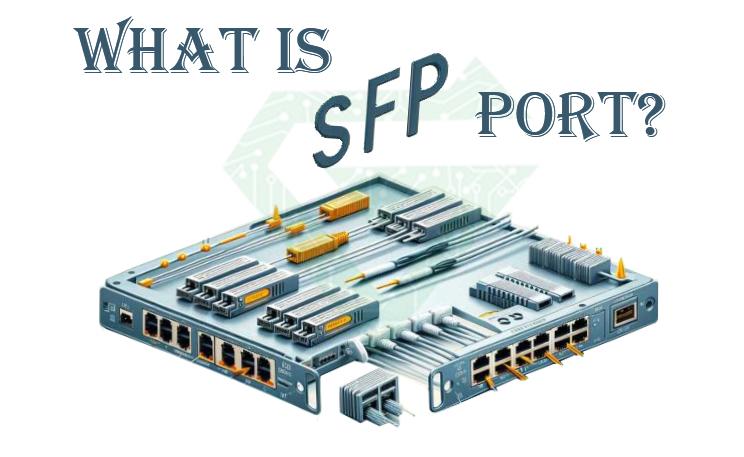
There are two types of SFP port with different functions that we will explain them in rest.
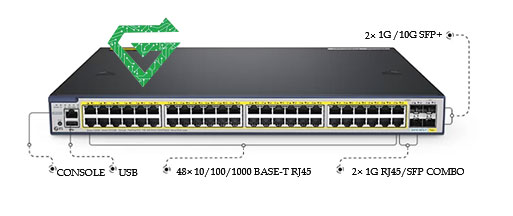
- SFP combo ports: this type of port is a combination of single interface with dual front ends (RJ45 port or SFP port), supporting both copper and optical SFP connections. It functions the same as another physical port. When two ports were compounded, we can’t use them simultaneously. Each SFP combo port is a single interface, offering a choice of two connections. One is an RJ-45 connection for a copper Ethernet cable, and the other is an SFP connection for a fiber optic cable. For instance, when a combo SFP port is being used in a Gigabit switch, the corresponding copper port cannot be used and vice versa.
- SFP uplink port: uplink port in computer or network refers to wired or wireless connection from LAN to WAN. Uplink port on router that you use in home is a particular type of port to connect to broadband modem. SFP uplink port usually connect with downlink port with higher speed. In this case, it acts like a lower-tier network when, another device serves as the higher network layer.
For preventing any errors, you should not connect two uplink ports together. Because it will make a failed link, remember to carefully check the port type before merging with other devices. It can classify to different types on speed supported.
Fast Ethernet port, 1G port, 2G port, 4G port, 8G port, 10G port and multi-rate port that introducing them.
Fast Ethernet port: this type of port supports 155Mbps or 100Mbps SFP module. Maybe, just some of switches and router have it.
1G port: This type supports 1.25G or 1G SFP module. It is one of the most common transceiver types in Ethernet switch and router.
2G port: it supports 2G or 2.5G SFP module that is not very popular between the users and most uses for 2G fc or SDH/SONET devices.
4G port: This type support 4G SFP module that uses more for fiber channel SAN switches or severs.
8G ports: this type of port support 8G SFP+ module, Similar to previous type. Normally it found in SAN switches or servers.
10G port: 10G SFP port supports higher speed and suitable for 10G SFP+ transceiver, providing 10x bandwidth than regular SFP module.
Multi-rate port: vice versa the fixed data rate port, this type of port support multi-rate SFP modules. Some 10G Ethernet switches in famous and top brand feature this port and allow to network manager for using multiple-speed transceivers in the same ports. This type cause of flexible and scalable network.
How does an SFP port work:
Connection of SFP port make transfer data in two devices with an SFP receiver and suitable cabling possible. In other case, the SFP ports and its receiver and sender allow to two devices to communicate with each other over an extended distance.
Read more: What is IP Address and its uses
What are the uses of an SFP port:
SFP port and SFP module use for facilitating seamless, high speed data communications or telecommunications connections over extended distance in a variety of applications. They’re often used to connect a 1G network switch to another, which, in turn, increase the size and improves the functionality of a network. The primary purpose of an SFP port is to transfer data to and from interconnected devices
this is useful in different uses such as military, industrial and commercial setting where a lot of devices in a widespread district need a wired, high speed and reliable connection.
They achieve this goal by housing an SFP module or transceiver attached to a fiber optic or copper cable. An SFP port is used for long-distance transmission and successful cabling, which are paramount for any modern networking environment.
What is PoE SFP port:
As you know, PoE port refers to transmitting power with traffic of data in single twisted pair Ethernet cable, so PoE port is the RJ45 slot with PoE functionally to enable the switch for forwarding data and power in one cable.
A switch that has PoE capable can deliver data and provide PDs simultaneously over a single copper cable. In this order, a PoE switch is both a data transmission device and a power sourcing equipment. for example, in Cisco C1000-24FP-4X-L, there are 24 × 10/100/1000 PoE+ port and 4 × 10G SFP+ module uplink slots.
What are differences between SFP, SFP+, XFP, SFP28 and QSFP28 ports?
If you are a person that works in network, surely, you hear these words. We want to explain these similar words and take an easy example to get it better.
SFP port is a common way to call, However, maybe we count an SFP high speed as an SFP+ port, such as 8G, 10G and 16G data rates.
The SFP28 port supports 25Gbps but its appearance is similar to SFP port. Sometimes, SFP28 is compatible with an SFP+ port and supports 10Gbps, that depends on the switch manufacturer setting.
XFP port is a physical slot that accepts XFP module plug-ins. XFP uses only for 8G and 10G XFP transceivers but doesn’t support other speeds.
QSFP28 port supports much higher speed of 100G. wise verse the SFP port, it supports a higher-speed transceiver and specification a bigger size and more pins on the connector.
In other words, the SFP, SFP+, and SFP28 ports are the same size and refer to the same thing except for the support speed. The QSFP28 port has different types and suitable for 100G data center switches.
| Comparison | RJ45 Port | SFP Port | SFP+ Port | SFP28 Port | XFP Port | QSFP28 Port |
|---|---|---|---|---|---|---|
| Reach | max 100m | max 180km | max 100km | max 80km | max 100km | max 80km |
| Data Rate | 1000M, 2.5G, 5G, 10G | 155M, 622M, 1G, 2G, 4G | 8G, 10G, 16G | 25G | 8G, 10G | 100G, 112G |
| Power Consumption | Medium | Lowest | Low | Low | Medium | High |
| Price | Low | Lowest | Medium | Medium | Medium | High |
| Size | Small | Small | Small | Small | A bit Bigger | A bit Bigger |
| Application | Access Switches | Access Switches | Campus Switches | Campus Switches, 5G Fronthaul Network | Campus Switches | Data center switch |
| Media Type | Only Copper | Fiber or Copper | Fiber or Copper | Fiber or Copper | Fiber or Copper | Fiber or Copper |
What is the difference between SFP port and RJ45 port?
In the real world, some network switches have both RJ45 ports and SFP ports with the same speed. Since they have the same functions, what are the points of the SFP port? What is their actual difference?
SFP and SFP+ modules are not really expensive and 1G and 10G connections are more expensive than RJ45 connections. RJ45 interface uses cooper cables to connect to network equipment that is normally cheaper than fiber.
RJ45 port only supports copper network cable, providing minimal link distance. The max length of 1G rate over Cat5 cable is around 100 meters. That is not enough in the switch connectivity for the longer link. However, you may achieve tens of kilometers or even 160~180km over single mode fiber. That is the actual performance difference.
RJ45 ports are used more in network switch until users don’t need to buy additional parts. Some of PoE ports has RJ45 port and support PoE that enables network cables to carry electrical power in addition to data. Most of SFP ports work with POE and focus more on data transmission.
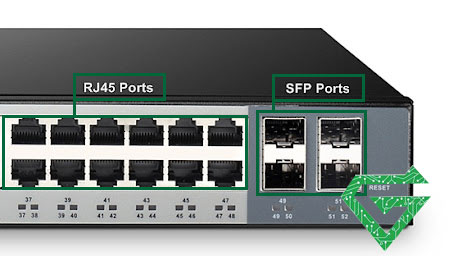
In addition, different supported distances, SFP also avoids electrical interference and surge isolation, lower power consumption, and lower total cost.
The decision of when to use an RJ45 port or an SFP port on a switch depends on the distance between the connection endpoints. If the endpoints are close enough to use copper, then it might be more practical and cost-effective to use RJ45. If the distance is great enough to require fiber, then teams should use SFP ports. Fiber is also a better choice where cables must run side by side for a distance that makes cross-talk between copper cables an issue.
Combo SFP ports on a switch offer support for both SFP and RJ45 ports using a single interface. Users can’t use both ports simultaneously, however, as only one type works at a time. These combo ports enable IT teams to choose a connection type that best matches application, network, cost or distance requirements.
Read more: What is Uplink Port and Its difference with Downlink
Conclusion:
We tried to explain SFP port and its uses well. SFP ports are very important of high-speed telecommunications and data communications. It uses more in large network environment. SFP port and SFP module help you to work together and using very fast and seamless connections.
If this article is useful, you can read other our posts in Atech blog. Please share your idea about it and make us more motivate to make better concept.